Showing posts with label sugar ants. Show all posts

Bringing 2016 To A Frozen Close

It's been some time since I last updated the Z Pest website, and I have all of my customers to thank for that: you've all kept me so busy that there wasn't much time left for anything else!

2016 marked five years in business for me under the Z Pest banner (nine years working in this industry), and it turned out to be the strongest year for the business so far.

Going into 2017, I will be making some new offerings available, things not currently provided by other operators in this area, so please keep checking back to see what's happening!

Snow is nice to look at... in photos... when they're not mine.
As for now, despite the heavy blanket of snow that we're under, some pests are still making themselves known in people's homes around the Walla Walla valley, and as such I'm still available if you need help. You may have a few spiders living with you as refugees from the cold (they may even hitch a ride on your fresh Christmas tree!), and it's not at all uncommon for ants to suddenly show up inside your house in the dead of winter, as I wrote about here around this time last year. Lately the Z Pest phone has been ringing quite a bit more than usual with calls about mice turning up in places where they're not wanted, too. These are pretty common occurrences in this region during this part of the year, so I'm well versed in getting them sorted out.

You can get in touch with me by phone, email, or text message if you need help (for texting, please provide some identifying information so I know if you're a new or returning customer). Invoicing and receipts can be handled paperlessly if you would like, and payments are accepted by cash, check, charge, and Bitcoin, whichever one or several of those methods is most convenient for you.

Z Pest Control LLC
509-540-7946
(Call or text!)
paul@zpestcontrol.com

The Grasshoppers Are Away, So The Ants Will Play

The Ant and the Grasshopper, one of Aesop's Fables, tells the story of the perils of failing to plan and prepare for hard times in the future. As the story goes, during the summer months when times are good and life is easy, Grasshopper spends all of his time playing on his fiddle and enjoying himself. Grasshopper teases Ant when he sees him working hard at laying up stores for the winter months ahead rather than playing. Inevitably, winter comes, and Grasshopper finds himself starving. He goes to Ant to beg for food, but Ant refuses him, in some versions of the tale telling Grasshopper to, "dance the winter away now."

Aesop's tale was a cautionary one for humans, warning us against allowing opportunity to slip past in times of plenty, especially when we know that it will not last. As for the insect characters Aesop used to deliver his message, I suspect that his choice of ants and grasshoppers was based on something close to home: despite the coming of winter, Aesop must have noticed that his house still had ants in it.

Summer's grasshoppers are long gone, as are the wasps, boxelder bugs, flies, many spiders, etc. Ants, however, are still in abundance during this time of the year indoors. When outdoor temperatures dropped to freezing, many folks around the Walla Walla valley suddenly found themselves with little black ants inside their house, whereas only a day before they had none. This is typically what will happen when over the summer a nest of Odorous House Ants (and sometimes Pavement Ants) established themselves within the structure. Foraging outdoors all summer unnoticed, the freezing temperatures outside force the nest to begin foraging indoors, the only option the ants have due to the limits of their biology.

If you are having this issue now and you are looking for help, please give me a call! For a typical house around the Walla Walla valley, I treat this problem for $40-$45, which includes touch-up visits over a 30 day period. The treatment methods I use do not require people or pets to leave during the application, and because the ant colonies are essentially trapped indoors at this time of the year, eliminating them is frequently easier than during the summer since it is too cold for new colonies to travel overland to the structure and invade again.

Z Pest Control LLC
509-540-7946
(Call or text!)
paul@zpestcontrol.com

Walla Walla Valley Current Pest Features and 2014 Previews

Over the last couple of days, the Z Pest phone has been ringing more and more as we haltingly move closer to spring time. Here's a short list of the things you can expect to see in the coming weeks that most often bother Z Pest customers, most of which can be dealt with at prices ranging from $40-$65 (plus tax), in rough order:

Odorous House Ants

Though on most days it's still a bit on the cold side as far as ants are concerned (and me, for that matter), the recent retreat of the snow we had around the Walla Walla valley has been followed by waves of ants emerging indoors from hiding places; specifically, it's everybody's tiny friends, the Odorous House ant ("OHA" for short). Or maybe it's just that ants get cabin fever, too. In any case, they're in your home and/or office and you're probably thinking that they have to go.

I can definitely help. But before I head on over, there are a few things you can do to help yourself and me:

1. Don't spray the ants! Most over-the-counter insecticide sprays, even the ones labeled for ants, contain what are known as "repellent" insecticides. They will kill whatever ants you can see, but it's the ants you don't see that matter the most: the queens (unfortunately, that's plural because OHA can have multiple queens in each colony). The surviving worker ants will smell the repellent insecticide and simply avoid that area, and the unaffected queens will continue to crank out eggs. What's worse, sometimes the ants will react by splitting up their colony and spreading out all over your house! Leave any spraying to me, as I use non-repellent, slow-acting products that will reach into their nests.


sugar ants, ants, odorous house ants, walla walla, dayton, milton freewater, pest control, exterminator
If the bait you're using works, this is how OHA will react.
2. Baits are ok! Not all baits are equal when it comes to OHA, as some are definitely better than others. What I tell people as a rule of thumb is that if the bait comes in a solid form, the ants are probably going to ignore it. Generally, a liquid form bait will perform better, and as far as over-the-counter baits go, Terro is the one I recommend you use for minor ant incursions. I use something different that avoids some of the flaws of baits like Terro, but it will at least get the ball rolling in the right direction for you.

3. Don't worry about cleaning! I know this can be a difficult thing for some to do, especially when a guest is going to be visiting your home. Let me assure you that after witnessing the chaos generally referred to as the "freshman dorm experience" at Washington State U., seeing a bit of clutter doesn't phase me. That said, I'm not saying that mountains of belongings and trash don't matter, as that would negatively affect my results, but your kitchen counter tops do not need to be squeaky clean just because I'm coming over. The reason cleaning can actually make things a bit harder for me when I come to treat your ants is that you may inadvertently remove the thing the ants were interested in, which in the case of OHA will cause them to go back into hiding. That doesn't make treating them impossible, but it can make it a longer process.

Ready to get rid of your ants? I can be reached at 509-540-7946!

Spiders

Spiders maintain both an indoor and and outdoor presence, and some species live up to a couple of years, which prompts them to spend winter indoors with us. The vast majority of spiders that you encounter in your home, office, and yard are NOT potentially harmful (physically, that is), and the species folks around here most commonly fear, the dreaded brown recluse spider, doesn't even live in this part of the United States!

spiders, brown recluse, wolf spider, pest control, exterminator, walla walla, dayton, milton freewater
This is a mother wolf spider that briefly lived with me, with
her newly hatched babies riding on her back.
Spiders you will commonly see around here are brown house spiders, jumping spiders, various types of orb weaving spiders, and swift little grass spiders. On occasion, you may encounter black widow spiders, but these shy, non-aggressive spiders will typically stay as far away as they can from you as you will from them.

During the winter months, I can help you reduce or eliminate populations of spiders inside your home or office with some simple crack, crevice, and spot spraying with appropriate pesticides. During the spring, summer, and fall, I mostly address spiders with exterior treatments (which can reduce or eliminate the presence of spiders indoors the following winter). If your home or office has a crawl space, I can also treat those spaces with insecticidal dusts that will provide even more long-term control of spiders (typically for six to eight months).

Boxelder Bugs

It's still a little on the cold side most days for our local six-legged sunbathers, but they are already making occasional appearances (as of the date of this writing, I've already performed one boxelder bug treatment for a customer this year).

boxelder bugs, walla walla, dayton, milton freewater, exterminator, pest control, insects
Boxelder bugs sunning themselves on the side of
a building belonging to one of my clients.

Though harmless to humans and pets, boxelder bugs are nonetheless extremely annoying as they mass in the hundreds or even thousands on the sides of our homes and offices. During the winter months, they wedge themselves into whatever cracks and crevices they can find (under siding, behind rocks, even into the cracks of old telephone poles!) where they wait for the return of spring. They can also commonly be found under gravel, bark beds, piles of leaves, etc.

Treating boxelder bugs is a simple matter of placing residual insecticides on the spots where they are likely to hang out, with emphasis on their preferred harborage areas. To get an early start on them, I can do a crack and crevice treatment around your home and a landscape spray on certain areas of your yard with long-lasting insecticides that will reduce their numbers early on in the season. If it gets to be later in the season before you decide you've had enough of them, no problem, as they can be addressed after they've emerged, too.

Weeds

weed control, dandelions, clover, thistles, weeds, lawn, walla walla, dayton, milton freewater
This is my front yard a few weeks after I treated it.
 I use the same stuff around my own home
and yard as I would around yours!
As soil temperatures slowly trend upward, several weed species will begin putting down roots and pushing up shoots. Others that began their life cycle in the fall months will come out of their slumber and finish up before summer sets in by producing the seeds that will restart their cycle when fall comes again.

Depending on the type of weeds you want controlled, be they in your lawn or your driveway, generally they can be stopped in advance with an application of "pre-emergent" herbicide products. If the weeds have already begun growing, such products can be combined with "post-emergent" herbicides to stop them in their tracks and help prevent more from following.

Z Pest is equipped to handle both large and small weed control jobs with hand-held and truck-mounted equipment. In many cases, these services can be scheduled along with other offered pest control services, which can potentially save you some money.

European Paper Wasps

These terrors of the eaves of your home are still a few months away from becoming a nuisance, but when their time does come again, they can be most effectively dealt with in the early days of their spring and summer life cycle.

paper wasps, bees, hornets, yellowjackets, wasps, walla walla, dayton, milton freewater
These are hibernating European paper wasps
that I found in a crate belonging to one of
my clients last winter. These wasps were
destroyed before they ever had a chance
to become a problem!
An invasive species from overseas that arrived in the United States in the early 1980's, the European paper wasp begins each season with the establishment of new nests by fertile queens that were hatched the previous year. They've spent the winter tucked away in sheltered places, waiting for warmer weather to come out and seek nesting sites.

Generally, these new queens are going to seek out eastern and southern-facing locations that offer solid surfaces to anchor a nest to. They do this to maximize their exposure to sunlight, which they require to warm their bodies. They will also tend to favor locations with accessible building materials (untreated wood - fence posts are a commonly used resource), water (your lawn sprinklers will provide plenty), and soft-bodied insect foods for their larva (any plants in your yard that harbor aphids will attract these wasps, for example).

Because the existence of entire future nests of European paper wasps depends on the success of these awakened queens, that is the ideal time to strike. Treatments around your home with long-term residual insecticides will kill these queens as they investigate your property as a potential nesting site, ensuring that dozens more wasps that each of them would have produced will never exist over the following months. As soon as you spot the young queens taking to the air, it's time to hit them. Give me a call when they do, I'll be ready.

There are plenty of other pests that Z Pest control can address for you in addition to these: earwigs, fleas, mice, birds, etc. Whatever it is that's giving you trouble, give me a call and I'll help you with it as best I can!

Z Pest Control LLC
509-540-7946
Ants on the march!

ants, ant control, extermination, walla walla, pest control
Featured in this post - read
on to discover why!
In the last couple of days, calls for ant control have ticked upward significantly. This is no surprise after the recent heavy rains we've experienced here in the Walla Walla valley. The types making themselves known are our two most common pest ants here, the Odorous House ant and the Pavement ant. Look at it from their perspective: if you were only about a millimeter in height and had a home at or below ground level, you would probably be looking to set up shop on higher ground now, too.

This isn't the only time that these ants will make their appearance in your home or business, however, as there are plenty of other reasons for them to do so. Narrowing down those reasons and finding an extermination solution is first a matter of answering one simple question: did the ants begin turning up after the weather warmed up, or have they been present inside your home when it was cold outside (roughly 50º F or below)?

The answer to that question helps to determine if your ants are living primarily outside in the soil and wandering in looking for a snack, or if they and their queens (that's right -- plural) have made their home in the walls of your home. It doesn't make much of a difference in terms of how the ants will be treated (that's mainly a question of climate conditions at the time), but it does help to determine how intense the inside vs. outside effort should likely be.

The method is a two-part method, exclude, and sabotage:

Exclude: excluding these pests from a structure is a matter of treating the outside of it such that it's not possible for the ants to gain a foothold inside. This is done with spray applications that are not detectable by the ants, that kill the ants slowly, and that the individual ants can spread to each other through physical contact. A spray of this type "excludes" ants from a structure in that it becomes an environment that will destroy an entire colony, not just individual ants. All common over-the-counter sprays lack virtually all of these features. As such, they are the opposite, and will tend to produce the opposite of the desired result (in fact, many of these sprays can prompt the ants to defend themselves by spreading their colonies out all over your house - the problem actually gets worse!).

Sabotage: ants love a free meal. Using ant baits is the best way to deal with them indoors; it's the Trojan Horse of ant control. The advantage of a bait over a spray is that a spray will only work if the ants are in the treated spot (and only if the spray matches the characteristics I described above), but a bait will go to where the ants are because the ants themselves will take it there! Further, the ants you can see are only workers, which if killed will be rapidly replaced by the queens. Those queens are your true targets, and it is with bait ferried to them by their workers that they can be most easily attacked and destroyed. Not all baits are created equal, however. As a rule of thumb of using bait for ants, if the ants don't respond to your bait like these ants did to mine...

ants, sugar ants, ant control, walla walla

...then your bait does not work. Those little plastic domes with solid form baits inside that people constantly buy, they're garbage. Throw them out, or better yet return them for a refund if you can. The reason those "work" is typically that someone sees some ants feeding on something, they run to the grocery/hardware store and spend their money on little plastic domes, they put those domes out... and then they clean. Suddenly, the ants are gone and they credit the little plastic domes. What actually happened is that cleaning took away whatever it was that was of interest to the ants, so the ants hid away again. The next time one of their scouts finds a dropped crumb, however, they'll come back out in full force as they were never really gone.

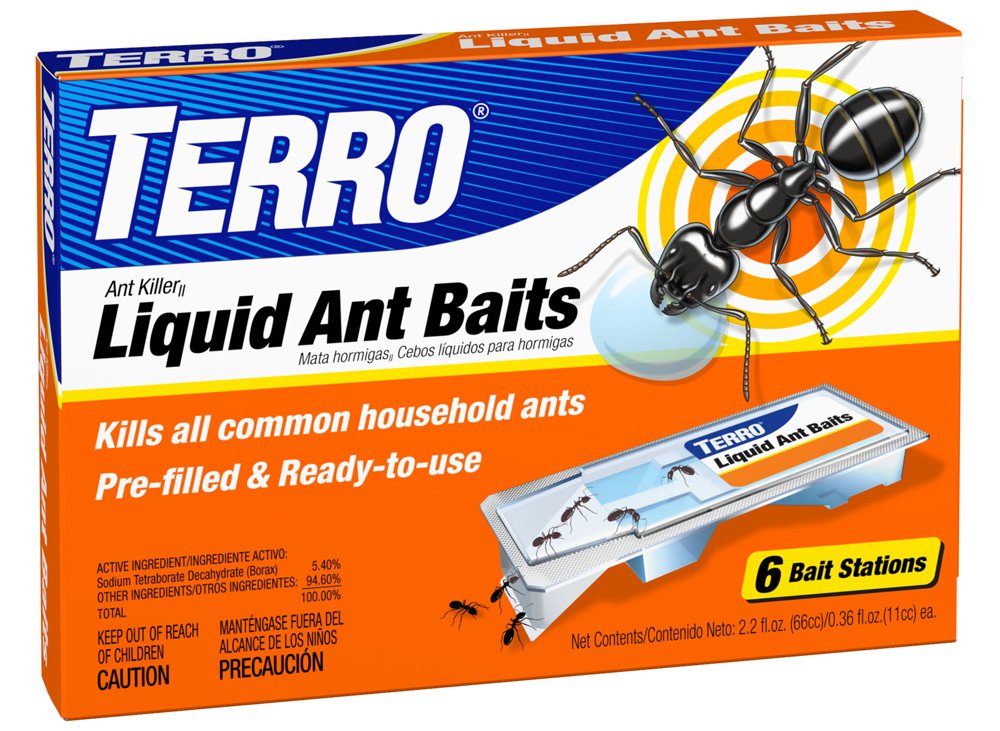
There is one kind of over-the-counter bait that works. It's a liquid bait, not a solid: Terro Liquid Ant Bait

 
This is the only OTC ant bait product I recommend to my clients as a stop-gap measure for those times I can't get to them right away, or for clearing up small ant incursions that may not warrant the cost of a full treatment. Terro is not as good as the products I use in my work, but it is adequate for keeping an ant issue down to a dull roar until the cavalry arrives. 
If you are dealing with a new or on-going ant infestation, you can try the product I'm recommending, or if you would like my help getting you ahead of the ants' game, give me a call! Treatments typically run around $60 to treat an average house inside and out in the Walla Walla valley area (more if the structure is larger, of course), dropping to $40 for follow-on 30 day periods if additional maintenance is necessary. I will also point out things in and around your home or place of business that may be encouraging ants to constantly invite themselves over for a picnic. My help is just a phone call or an email away!

509-540-7946
paul@zpestcontrol.com