Showing posts with label local business. Show all posts

Earwigs here, earwigs there...

earwigs, extermination, pest control, walla walla
...earwigs everywhere!

Perhaps because of rapidly improving summer weather and the desire of people here in the Walla Walla valley to spend time outdoors enjoying it, more people lately are encountering earwigs. We've all experienced the usual scenario when it comes to these - you move something on your deck or in your yard that has been sitting for a while, and suddenly earwigs are running everywhere!

Why are these earwigs here?!


Primarily, the reason you have a bunch of earwigs around your home and yard is moisture. Earwigs are mostly nocturnal creatures that seek out moist, shaded spots to spend the day - get them in the sun for very long and they dry up and die. Popular earwig hangouts include objects placed outside (coolers, planters, folded-up lawn furniture; just about anything), crack and crevice areas such as broken pavement slabs, the point where a lawn meets a patio or the foundation of your house, or in the cool, moisture-retaining environment found underneath leaf litter, mulch, decorative rock, etc.

What are these earwigs doing?

Earwigs are out there feeding on other insects, decaying plant and animal matter, and at times damaging living  plants in your landscape. One thing that they're definitely NOT doing is seeking out your ears - that's a popular myth that makes a somewhat scary looking insect more scary to people than it ought to be. Other than the occasional defensive pinch (which an earwig did to my foot last night while I was enjoying my backyard fire pit), earwigs are not going to seek out interactions with you very much, or at all.

How do I get rid of my earwigs?

Since moisture is key to an earwig's needs, eliminate sources of moisture in your home and around your yard. For the most part this will be an outdoor effort, as much of the earwig activity in your home is likely due to them accidentally wandering inside (however, be on the lookout for moisture in your home, which can be a sign of a structural problem that should be corrected). Remove leaf litter, grass clippings, etc. from the yard; move decorative rocks, paving stones, etc. away from the structure; store lawn furnishings in high and dry places when possible; clean and clear gutters and ensure that your downspouts are directing water away from your foundation, and so forth. Basically, whatever you can alter in and around your home to dry out the environment will help a great deal.

Chemical control is highly effective against earwigs, and in cases where an environment that favors earwigs cannot be altered - such as the point where your yard meets your foundation - it is necessary. A commonly available product that is effective against earwigs is Ortho's Home Defense:

This can be sprayed around the foundation of your home to provide some relief from earwigs. I say "some," however, because what this product lacks is the ability to deliver a high volume of spray deep into the places where earwigs find harborage (this is due to the relatively limited quantity of spray and the limitations of the application device it comes with, not the active ingredient). That's what I use my powered spraying equipment to do:

My equipment allows me to project the insecticides I use for this type of work deep into the places that earwigs hide, which not only kills the earwigs that are there at the time, but prevents other earwigs from moving into the space for a period of around four to six weeks.

The over-the-counter product I've mentioned here will help you to get a bit more of a handle on your earwigs, but if you would like a more thorough, penetrating knock-down of their numbers around your home and yard to get you ahead of the game, I can help. To treat directly around an average house in the Walla Walla valley area, I charge between $40-$45, plus tax when applicable (I work in both Washington and Oregon). While I'm at it I keep an eye out for other things I can treat for you, such as paper wasps, spiders, etc., which I generally throw in at no extra charge. If you like, I can also expand the treatment further out into your yard, which typically adds 50% to the total price for the job (the exact pricing depends on the size of the yard and the extent of the treated area, but the "average" house and yard around here would bring the total to somewhere around $60 before tax). If this sounds good to you, please email me or give me a call! I can typically respond very rapidly to this kind of work, often on the same day.

509-540-7946

Ants on the march!

ants, ant control, extermination, walla walla, pest control
Featured in this post - read
on to discover why!
In the last couple of days, calls for ant control have ticked upward significantly. This is no surprise after the recent heavy rains we've experienced here in the Walla Walla valley. The types making themselves known are our two most common pest ants here, the Odorous House ant and the Pavement ant. Look at it from their perspective: if you were only about a millimeter in height and had a home at or below ground level, you would probably be looking to set up shop on higher ground now, too.

This isn't the only time that these ants will make their appearance in your home or business, however, as there are plenty of other reasons for them to do so. Narrowing down those reasons and finding an extermination solution is first a matter of answering one simple question: did the ants begin turning up after the weather warmed up, or have they been present inside your home when it was cold outside (roughly 50º F or below)?

The answer to that question helps to determine if your ants are living primarily outside in the soil and wandering in looking for a snack, or if they and their queens (that's right -- plural) have made their home in the walls of your home. It doesn't make much of a difference in terms of how the ants will be treated (that's mainly a question of climate conditions at the time), but it does help to determine how intense the inside vs. outside effort should likely be.

The method is a two-part method, exclude, and sabotage:

Exclude: excluding these pests from a structure is a matter of treating the outside of it such that it's not possible for the ants to gain a foothold inside. This is done with spray applications that are not detectable by the ants, that kill the ants slowly, and that the individual ants can spread to each other through physical contact. A spray of this type "excludes" ants from a structure in that it becomes an environment that will destroy an entire colony, not just individual ants. All common over-the-counter sprays lack virtually all of these features. As such, they are the opposite, and will tend to produce the opposite of the desired result (in fact, many of these sprays can prompt the ants to defend themselves by spreading their colonies out all over your house - the problem actually gets worse!).

Sabotage: ants love a free meal. Using ant baits is the best way to deal with them indoors; it's the Trojan Horse of ant control. The advantage of a bait over a spray is that a spray will only work if the ants are in the treated spot (and only if the spray matches the characteristics I described above), but a bait will go to where the ants are because the ants themselves will take it there! Further, the ants you can see are only workers, which if killed will be rapidly replaced by the queens. Those queens are your true targets, and it is with bait ferried to them by their workers that they can be most easily attacked and destroyed. Not all baits are created equal, however. As a rule of thumb of using bait for ants, if the ants don't respond to your bait like these ants did to mine...

ants, sugar ants, ant control, walla walla

...then your bait does not work. Those little plastic domes with solid form baits inside that people constantly buy, they're garbage. Throw them out, or better yet return them for a refund if you can. The reason those "work" is typically that someone sees some ants feeding on something, they run to the grocery/hardware store and spend their money on little plastic domes, they put those domes out... and then they clean. Suddenly, the ants are gone and they credit the little plastic domes. What actually happened is that cleaning took away whatever it was that was of interest to the ants, so the ants hid away again. The next time one of their scouts finds a dropped crumb, however, they'll come back out in full force as they were never really gone.

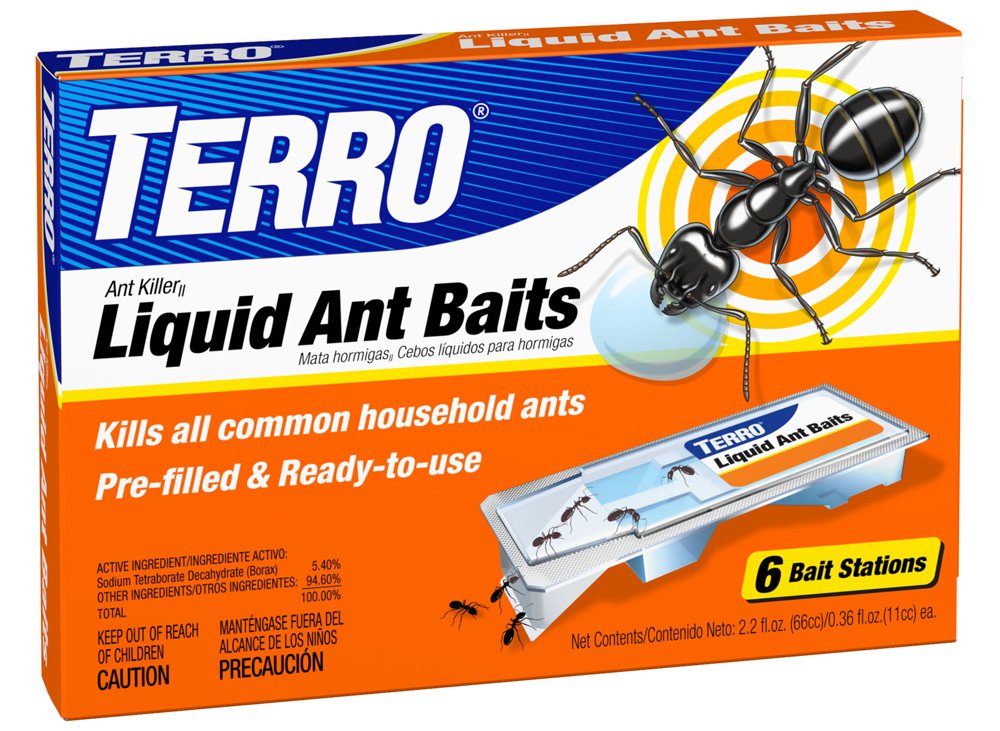
There is one kind of over-the-counter bait that works. It's a liquid bait, not a solid: Terro Liquid Ant Bait

 
This is the only OTC ant bait product I recommend to my clients as a stop-gap measure for those times I can't get to them right away, or for clearing up small ant incursions that may not warrant the cost of a full treatment. Terro is not as good as the products I use in my work, but it is adequate for keeping an ant issue down to a dull roar until the cavalry arrives. 
If you are dealing with a new or on-going ant infestation, you can try the product I'm recommending, or if you would like my help getting you ahead of the ants' game, give me a call! Treatments typically run around $60 to treat an average house inside and out in the Walla Walla valley area (more if the structure is larger, of course), dropping to $40 for follow-on 30 day periods if additional maintenance is necessary. I will also point out things in and around your home or place of business that may be encouraging ants to constantly invite themselves over for a picnic. My help is just a phone call or an email away!

509-540-7946
paul@zpestcontrol.com