Showing posts with label boxelder bugs. Show all posts

Walla Walla Valley Fall Pest Control

Though it is still August now September and the days are remain warm, you may have begun to notice the nights becoming cool and the days just a little bit shorter. It's very slight, almost imperceptible, but it's there. 

Several insect and arachnid species around here have noticed, and their changing behaviors clearly indicate that fall is coming. 

Call now!

Paul: (509) 540-7946

Jump to: Spiders ∙ Wasps ∙ Boxelder Bugs ∙ Ants ∙ Mice ∙ Pheasants

European paper wasps, several types of spiders, boxelder bugs, and other critters will begin shifting their focus from "out and about" to "in and hide out". Those species that do not overwinter in an egg or pupal stage are in need of shelter to wait out the cold, dark months ahead, and your home or business is high up on their list of real estate to evaluate. 

If you're reading this, it's probably because you're not planning on hosting an open house for them. 

Here's the most common Walla Walla Valley fall and winter invaders that Z Pest Control can help you with:

Spiders

spider

By far the greatest number of fall service requests that Z Pest Control receives are for spiders. There are several kinds of them in the Walla Walla Valley area that have lifespans of several years, so when the cold months roll around they roll on over to your place. There are both ground dwelling and climbing varieties of spiders that do this, so you'll find them both high and low inside when our hemisphere tilts away from the sun. 

In the initial part of what we at Z Pest Control refer to as "spider migration season", typically in September, most of the effort focuses on the exterior of your home or business. We can do interior and exterior work, separately or together, at any time (service fee discounts kick in when multiple services are performed during the same visit), but most of the "bang" for your buck comes from outdoor applications in the early-to-mid part of this annual phase. 

If you're a Z Pest Control client on a pre-scheduled monthly or quarterly no-contract service plan, no worries! You're already benefitting from this coverage! We'll be there without you needing to remember to contact us.


Wasps

wasp
At our latitude, all wasp species function as "annual" insects, as opposed to a "perennial" species like our fuzzy, buzzy little friends, honey bees. The former construct nests in the spring that are abandoned in the fall, while the latter have true colonies that persist year-round. This is true of European paper wasps, aerial and subterranean yellowjackets, and the born angry bald faced hornets (which are not true hornets; they're a type of yellowjacket... which are wasps. I know, weird, right?).

When those nests are abandoned, the youngest, gravid female wasps seek shelter to sleep off the winter within, they reemerge in the spring, and then they begin their specie's life cycle anew. So as fall approaches, they will begin cramming into any crack or crevice they can find.

That means they're coming to your place, from near and far.

Around structures, this can be places where exterior coverings have separations, gaps around vents or the vents themselves, broken door seals, open containers left outside, etc. If you have vinyl insert windows, the little "weep holes" on the outside of the frame are very popular with these gals, especially the European paper wasps. It is because of this hibernation behavior that you may have found wasps banging their heads against the inside of your windows on past unusually warm mid-winter days, or in the spring: when they wake up, they are often trapped indoors and try to follow the sun to get outside. 

Back-to-back exterior applications about 30 days apart in the fall during the start of the wasp hibernation cycle, when they begin seeking out places like your home to go to sleep, help to reduce or even eliminate their presence later on. This in turn decreases the incidents of wasp queens becoming trapped in your house, and greatly reduces the number that emerge from sleep on your property next spring that subsequently decide to establish nests there. 

(On that note: when spring comes again, we have ways of intercepting and disrupting wasp nest building behavior, such that you won't have nests in treated areas for the rest of the season.)


Boxelder Bugs

boxelder bug
Boxelder bugs, members of the "True Bug" order (Order Hemiptera), are one of several members of this grouping of insects that inhabit the Walla Walla Valley. The boxelder bug gets particular emphasis here though because they are easily the most numerous, and thereby the most annoying. 

The Boxelder bug is a bit unique in that two generations of the insect occur during each spring and summer. A generation of them emerge from their winter hiding spots in the spring and give rise to the "spring generation", which feasts on the varieties of maple trees we have around here that set seed in the first part of the warmer months. A few months later, the spring generation creates the "summer generation" of boxelder bugs, which feast together on the later-seeding maples. Staggered maple seed growth, matched by staggered boxelder bug hatching. Nature's pretty neat, isn't it?

Neat, up until flying boxelder bugs are crashing into your face every time you try to walk out your front door.

The summer generation of boxelder bugs is the one that will seek out places to spend the winter, which is why you may have experienced them swarming your home in the fall before. This is also why you may have found yourself vacuuming them up all over the inside on sunny days in late-winter to early-spring when they rapidly emerge from slumber: they find a way into the structure in the fall months, then become fixated on sunlight streaming through your windows when they wake up and try to go about their business again.

There's really no way to stop boxelder bugs from coming to your home or business in the first place, but Z Pest Control can provide exterior applications that will drastically reduce their numbers upon arrival, which will go a long way toward bringing their numbers down inside and out in the months ahead. We also have a comprehensive approach to massively reducing boxelder bug populations locally throughout the year, especially if your property is host to one or several maple trees of any variety. 


Ants

ants
Odorous House ants, one of several small ant species that inhabit the Walla Walla Valley, and easily the most numerous, are a common pest that Z Pest Control remedies throughout the year. It's common for us to receive calls from people who suddenly find their homes or offices inundated when outdoor temperatures drop.

It's not because the ants pulled on their snowshoes and trudged their way over to your place, it's because they were there already, probably since the prior spring. 

In the warmer months, these ants (and other types that colonize built structures) can do two things: keep nests near the outer perimeter of a structure and forage outdoors for food. This makes it less likely that you will notice their presence. During the colder months, they have to do both things differently: keep nests deep within a structure and forage for food indoors. 

Basically, when winter comes, ant colonies that are already within the perimeter of a structure will move further into it. This is because ant larvae require temperatures of at least 68º F or higher to develop, because ant foragers cannot move well when they're cold (or die in extreme cold), and because your nice, warm home or office is probably full of food and water (especially when dark, cold days prompt most people to bring in sugary "comfort foods")! 

Z Pest Control offers ant control throughout the year, both inside and out, which can both cure and prevent. Z Pest's outdoor ant control applications can prevent colony establishment within your home or place of business, but if they've already gotten inside, Z Pest has the means to trick them into destroying themselves, top to bottom. 

Mice

mice
Like ants, mice are a pest that may have been with you for quite some time, but in more pleasant weather will locate at the perimeters of your home or business rather than nearer the center and thus may escape notice until it gets cold out. 

Generally, mice will establish nests within 30-40 feet of food sources (both vertically and horizontally), and in locations where they can stay warm as their physiology makes them lose body heat rapidly. While they can and do operate outdoors during the winter months (especially if you keep a full bird feeder nearby!), the better bet for them is to go deeper into structures during winter.

The Z Pest Control approach to controlling mice begins with a key premise: in the "hierarchy of needs" of a mouse, shelter tops the list, so we take away shelter first. Even if your home or office is devoid of food, if a mouse can use it to solve its need for shelter, it will, and then it will solve its need for food later. 

Thus, the Z Pest Control rodent control process begins with inspection to identify likely rodent entry points and pathways. The effort then turns to eradication and on-going control by placement of rodenticide baits and various types of traps, which are maintained on a monthly or quarterly service plan (this can be as short in duration as just the first month; Z Pest Control does not stick clients with burdensome contracts!). The bait stations and traps deployed are sold to you so that at the end of the service there's no confusion about who owns what, also enabling you to maintain the rodent control Z Pest has established yourself, or with the help of another provider if you decide to go with someone else. 

The mice that get into your house make life harder, so I try to make this easier for you. 


Pheasants

pheasants
Just kidding, pheasants are not pests. 

Paul does have a current Washington small game license and a raging upland bird hunting habit though. The season is almost here, his 12 gauge is clean and ready, and he has a decent supply of his favorite shot shells on-hand. So, if you know of good "Feel Free to Hunt" locations, or you own property that pheasant, quail, partridge, or grouse call home and you wouldn't mind letting him hunt on it, please call, text, or email him with an invite!


Back to top ]

Thanks for reading! If you need help with any of the above creatures, or any of the other pests that Z Pest Control LLC handles, please call, text, or email:


For all services in Washington or Oregon, call Paul

(509) 540-7946

paul@zpestcontrol.com


This Wasp Didn't See Her Shadow Either

This morning when I stepped out of my shower I was greeted by a peeping tom. In this situation it's good that it was a wasp that was unannounced and uninvited in my bathroom rather than another human, making this perhaps one of the few times that it's nice to have a wasp in the house.

This is her, groggily climbing the wall next to my bathroom window.

What was she doing there, and how do I know that it was a she? The latter question is simple to answer: it's a she because mated paper wasp queens that were hatched during the previous summer and fall are the only ones who survive and hibernate through the winter. That also answers half of the former question, what was she doing in my bathroom: every year a few paper wasps will choose the roof vent of my bathroom fan to hibernate in, resulting in some of them becoming confused and entering my house through the fan by mistake when they begin to wake up as spring approaches (a couple of nice, warm winter days can sometimes confuse them and prompt an early emergence, too).

The next thing that typically happens is that I find these lost wasps hanging out around the very same window where I found this one today. The reason is that this window faces east, which puts it in just the right spot to catch the morning sun. Like many flying insects, European paper wasps use the sun to navigate and for warmth, so in an enclosed space like a house they will tend to gravitate toward sources of natural light. Most of the time this means they travel to eastern and southern-facing windows, the areas of a structure that get the most light first and longest. Once they get that far and are stopped by the glass, they tend to stay put. They can be easily swatted at this point, or if left alone they will die of dehydration eventually.

I decided to take this picture of my royal visitor this morning and post this tale because chances are that if I am seeing this happening around my house now, people around the Walla Walla valley and beyond probably are, too.

When you see insects begin to appear around your house as spring approaches, like this wasp, it usually means that they have been in some part of the house all winter long. They could be anywhere and have emerged from hundreds of possible entry points, but most of the time they'll simply head for spots where they perceive sun and end up dying there. When it comes to wasps like my visitor, there's not much you can do about them, but fortunately there's also not much to worry about: at this stage, these wasp queens will be very sluggish, and in general because they represent the future of their species they will not be aggressive. They have everything to lose at this point, so random attacks on humans (or anything else for that matter) are not at all on their "to-do" list.

Preventing the springtime appearance of European paper wasps in your home (also insects like boxelder bugs, brown marmorated stink bugs, and some spiders) is actually primarily a fall pest control endeavor. Treating the outside of a home during the fall when many insects seek out winter hibernation spots helps to keep their numbers down by placing an insecticide in their path such that they will be intercepted and killed when they come around to inspect your dwelling.

That's not so say that absolutely nothing can be done about them being in your home now, but just as food for thought the next time fall approaches. If you feel that you have an extraordinary number of paper wasps, boxelder bugs, etc. appearing in your home or office right now, I'd be happy to help as much as I can.

Z Pest Control LLC
509-540-7946
(Call or text!)
paul@zpestcontrol.com

How Often Should Pest Control Be Done?

The busy season for pest control in the Walla Walla valley is in full swing now, with just about every variety of pest that Z Pest Control remedies making themselves known in our homes and yards.

The markedly increased activity that comes around at this time of the year has been putting me into touch with lots of new customers almost daily. A question that comes up frequently when I meet a client for the first time is:

 "When should this treatment be done again?" 

I decided to write a little about that topic since I've never covered it on my site before.

The short answer: pest control treatments should be repeated as often as necessary to reduce pests to the level you're comfortable with.

That's how I do it: you tell me when you're feeling good about the number of pests that are around (if any), and then the service(s) can be stopped if you want. I don't do contracts, so you're never on the hook for services you may not need any longer once your pests are gone.

There is a minimum amount of time that I must wait before some treatments can be repeated, which is basically once per month. Some of my clients, the ones who feel the most uncomfortable when insects and spiders are around, generally select this frequency. Several of those clients purchase monthly service only during the months of April through October. Others are fine with quarterly visits, and a handful of clients I only see once per year. All others I help out if and when a pest problem arises, and that's all. Everyone's situation is different, so I accommodate that as best I can.

The type of pest being treated also determines how often treatments need to be done for the best results, and when. Some examples:

wasps, bees, hornets, yellowjackets, pest control, exterminator, walla walla, milton freewater, dayton, 99362
European paper wasps on a Z Pest client's mail box.
I bet the mail carrier prefers mean dogs to this!
European Paper Wasps: treatments during early to late spring, typically at least two spaced one month apart, do a lot to suppress paper wasp numbers for the rest of the season. This is because at the start of their nesting cycle, the only wasps out and about are queens. If they die, an entire nest will never exist. A maintenance application a few months later in the summer can help to keep them away, and a final fall application can potentially kill off newly hatched queens that come around your house looking for places to hibernate.

boxelder bugs, pest control, exterminator, 99362, walla walla, milton freewater, dayton
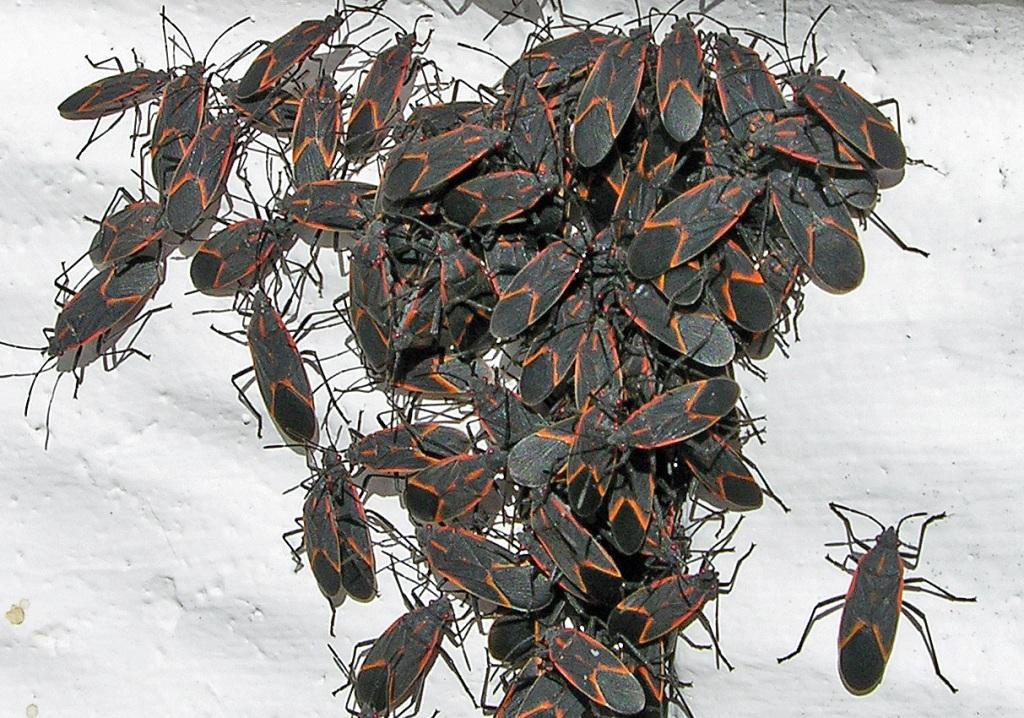
A cluster of boxelder bugs. A small cluster...
Boxelder bugs: keep hitting them until they're gone, starting around April and continuing through October. The earlier they are treated, the better, but it's never too late in the season to begin attacking them. Boxelder bugs are simply everywhere around here, so more will arrive in the treatment area all the time. Removing things like leaf litter, bark, gravel, etc. can reduce their harborage and thereby their numbers locally, but generally it takes a couple of insecticide applications spaced roughly one month apart to really knock them down.


ants, sugar ants, carpenter ants, pest control, exterminator, 99362, walla walla, milton freewater, dayton
Odorous House ants feeding on something sweet.
Ants: it depends on the type of ant, how long the infestation has been present, and what kinds of remedies someone may have tried in the past to deal with them. Generally, control of ants can be brought about in a month or two, as long as any conditions that might be favoring the ants are corrected (things like plants touching the outside of your house, exposed food inside, etc.). Ants can be active all year long, depending on where their nests are located, meaning that addressing them is in part a matter of adjusting treatment sites seasonally.

spiders, brown recluse, hobo spider, jumping spider, pest control, exterminator, 99362, walla walla, milton freewater, dayton
Don't worry, we don't have these around
the Walla Walla valley. :)
Spiders: monthly treatments go a long way toward keeping spiders down, with exterior applications providing the most benefit from April through October, and interior treatments being typically all that's necessary from November through March. Crawl spaces can also be "dusted" with dry formulation insecticides to kill spiders and keep them out, a treatment that's typically effective for six to eight months. If nothing else, have the outside of your home treated in the fall, which will kill off many spiders attempting to come inside to snuggle with you during the winter.

mouse, mice, rodents, pest control, exterminator, 99362, walla walla, milton freewater, dayton
A mouse that ate its last meal
 in the Z Pest office.
Mice: rodents are a year-round pest, potentially becoming somewhat more bothersome in and around structures during the winter months. Treating them is a matter of placing baits and traps and keeping them up for as long as mice continue to get caught and nibble the baits. Sometimes a mouse issue will end quickly (such as the handful of times I've trapped a single male mouse for a client, which ended all of their problems), and other times the presence of rodents is an on-going issue, necessitating a regular monthly service. If their activity begins to slow down, but not quite stop, visits can be spaced out to every-other month, quarterly, etc., which reduces your cost for the service.

weeds, lawn weeds, dandelions, driveway, gravel, sterlization, weed control, 99362, walla walla, milton freewater, dayton
Buckhorn plantain in the Dixie, Washington cemetery
before I began volunteering to treat the weeds there.
Weeds: there are two weed cycles that are important to address early on to keep a given area relatively weed-free all year long: the spring annual and perennial weed cycles, and the fall annual weed cycle. The first type begin growing in the spring and complete their life cycle before fall. The latter type begin growing in the fall, sit dormant for the winter, and then complete their life cycle in the spring. Any kind of weed is best treated when it first begins to grow, meaning that the most effective weed control is achieved with a properly-timed spring application, and then another application in the fall. This is true of selective weed control in lawns, or total weed control in places like driveways, gravel parking lots, etc. Along with your weed control, I can do some fertilizing if you would like, too.

These are just a few examples of the pest services that I offer. If you need help with something, give me a call and ask about it. There's a pretty good chance that what is bothering you is something that I do work on.

So then, to sum up:

Pest Control Frequency: When you're ready for it.
Time of the Year: Depends on the pest.
Termination of Services: When you want to.
Contract Commitments: NONE.

Sound good? Give me a call!

Z PEST CONTROL LLC
509-540-7946


Walla Walla Valley Current Pest Features and 2014 Previews

Over the last couple of days, the Z Pest phone has been ringing more and more as we haltingly move closer to spring time. Here's a short list of the things you can expect to see in the coming weeks that most often bother Z Pest customers, most of which can be dealt with at prices ranging from $40-$65 (plus tax), in rough order:

Odorous House Ants

Though on most days it's still a bit on the cold side as far as ants are concerned (and me, for that matter), the recent retreat of the snow we had around the Walla Walla valley has been followed by waves of ants emerging indoors from hiding places; specifically, it's everybody's tiny friends, the Odorous House ant ("OHA" for short). Or maybe it's just that ants get cabin fever, too. In any case, they're in your home and/or office and you're probably thinking that they have to go.

I can definitely help. But before I head on over, there are a few things you can do to help yourself and me:

1. Don't spray the ants! Most over-the-counter insecticide sprays, even the ones labeled for ants, contain what are known as "repellent" insecticides. They will kill whatever ants you can see, but it's the ants you don't see that matter the most: the queens (unfortunately, that's plural because OHA can have multiple queens in each colony). The surviving worker ants will smell the repellent insecticide and simply avoid that area, and the unaffected queens will continue to crank out eggs. What's worse, sometimes the ants will react by splitting up their colony and spreading out all over your house! Leave any spraying to me, as I use non-repellent, slow-acting products that will reach into their nests.


sugar ants, ants, odorous house ants, walla walla, dayton, milton freewater, pest control, exterminator
If the bait you're using works, this is how OHA will react.
2. Baits are ok! Not all baits are equal when it comes to OHA, as some are definitely better than others. What I tell people as a rule of thumb is that if the bait comes in a solid form, the ants are probably going to ignore it. Generally, a liquid form bait will perform better, and as far as over-the-counter baits go, Terro is the one I recommend you use for minor ant incursions. I use something different that avoids some of the flaws of baits like Terro, but it will at least get the ball rolling in the right direction for you.

3. Don't worry about cleaning! I know this can be a difficult thing for some to do, especially when a guest is going to be visiting your home. Let me assure you that after witnessing the chaos generally referred to as the "freshman dorm experience" at Washington State U., seeing a bit of clutter doesn't phase me. That said, I'm not saying that mountains of belongings and trash don't matter, as that would negatively affect my results, but your kitchen counter tops do not need to be squeaky clean just because I'm coming over. The reason cleaning can actually make things a bit harder for me when I come to treat your ants is that you may inadvertently remove the thing the ants were interested in, which in the case of OHA will cause them to go back into hiding. That doesn't make treating them impossible, but it can make it a longer process.

Ready to get rid of your ants? I can be reached at 509-540-7946!

Spiders

Spiders maintain both an indoor and and outdoor presence, and some species live up to a couple of years, which prompts them to spend winter indoors with us. The vast majority of spiders that you encounter in your home, office, and yard are NOT potentially harmful (physically, that is), and the species folks around here most commonly fear, the dreaded brown recluse spider, doesn't even live in this part of the United States!

spiders, brown recluse, wolf spider, pest control, exterminator, walla walla, dayton, milton freewater
This is a mother wolf spider that briefly lived with me, with
her newly hatched babies riding on her back.
Spiders you will commonly see around here are brown house spiders, jumping spiders, various types of orb weaving spiders, and swift little grass spiders. On occasion, you may encounter black widow spiders, but these shy, non-aggressive spiders will typically stay as far away as they can from you as you will from them.

During the winter months, I can help you reduce or eliminate populations of spiders inside your home or office with some simple crack, crevice, and spot spraying with appropriate pesticides. During the spring, summer, and fall, I mostly address spiders with exterior treatments (which can reduce or eliminate the presence of spiders indoors the following winter). If your home or office has a crawl space, I can also treat those spaces with insecticidal dusts that will provide even more long-term control of spiders (typically for six to eight months).

Boxelder Bugs

It's still a little on the cold side most days for our local six-legged sunbathers, but they are already making occasional appearances (as of the date of this writing, I've already performed one boxelder bug treatment for a customer this year).

boxelder bugs, walla walla, dayton, milton freewater, exterminator, pest control, insects
Boxelder bugs sunning themselves on the side of
a building belonging to one of my clients.

Though harmless to humans and pets, boxelder bugs are nonetheless extremely annoying as they mass in the hundreds or even thousands on the sides of our homes and offices. During the winter months, they wedge themselves into whatever cracks and crevices they can find (under siding, behind rocks, even into the cracks of old telephone poles!) where they wait for the return of spring. They can also commonly be found under gravel, bark beds, piles of leaves, etc.

Treating boxelder bugs is a simple matter of placing residual insecticides on the spots where they are likely to hang out, with emphasis on their preferred harborage areas. To get an early start on them, I can do a crack and crevice treatment around your home and a landscape spray on certain areas of your yard with long-lasting insecticides that will reduce their numbers early on in the season. If it gets to be later in the season before you decide you've had enough of them, no problem, as they can be addressed after they've emerged, too.

Weeds

weed control, dandelions, clover, thistles, weeds, lawn, walla walla, dayton, milton freewater
This is my front yard a few weeks after I treated it.
 I use the same stuff around my own home
and yard as I would around yours!
As soil temperatures slowly trend upward, several weed species will begin putting down roots and pushing up shoots. Others that began their life cycle in the fall months will come out of their slumber and finish up before summer sets in by producing the seeds that will restart their cycle when fall comes again.

Depending on the type of weeds you want controlled, be they in your lawn or your driveway, generally they can be stopped in advance with an application of "pre-emergent" herbicide products. If the weeds have already begun growing, such products can be combined with "post-emergent" herbicides to stop them in their tracks and help prevent more from following.

Z Pest is equipped to handle both large and small weed control jobs with hand-held and truck-mounted equipment. In many cases, these services can be scheduled along with other offered pest control services, which can potentially save you some money.

European Paper Wasps

These terrors of the eaves of your home are still a few months away from becoming a nuisance, but when their time does come again, they can be most effectively dealt with in the early days of their spring and summer life cycle.

paper wasps, bees, hornets, yellowjackets, wasps, walla walla, dayton, milton freewater
These are hibernating European paper wasps
that I found in a crate belonging to one of
my clients last winter. These wasps were
destroyed before they ever had a chance
to become a problem!
An invasive species from overseas that arrived in the United States in the early 1980's, the European paper wasp begins each season with the establishment of new nests by fertile queens that were hatched the previous year. They've spent the winter tucked away in sheltered places, waiting for warmer weather to come out and seek nesting sites.

Generally, these new queens are going to seek out eastern and southern-facing locations that offer solid surfaces to anchor a nest to. They do this to maximize their exposure to sunlight, which they require to warm their bodies. They will also tend to favor locations with accessible building materials (untreated wood - fence posts are a commonly used resource), water (your lawn sprinklers will provide plenty), and soft-bodied insect foods for their larva (any plants in your yard that harbor aphids will attract these wasps, for example).

Because the existence of entire future nests of European paper wasps depends on the success of these awakened queens, that is the ideal time to strike. Treatments around your home with long-term residual insecticides will kill these queens as they investigate your property as a potential nesting site, ensuring that dozens more wasps that each of them would have produced will never exist over the following months. As soon as you spot the young queens taking to the air, it's time to hit them. Give me a call when they do, I'll be ready.

There are plenty of other pests that Z Pest control can address for you in addition to these: earwigs, fleas, mice, birds, etc. Whatever it is that's giving you trouble, give me a call and I'll help you with it as best I can!

Z Pest Control LLC
509-540-7946

Boxelder Bugs: They're Back!

As our daytime temperatures in the Walla Walla valley have steadily risen recently, so, too, has the presence of these little guys and gals:

boxelder bugs, pest control, walla walla, extermination

Boxelder bugs!

I took this photo the other day outside of a client's place of business. Though largely harmless (boxelder bugs don't bite, sting, or cause significant damage to plants), these insects are exhibiting the part of their behavior that makes them a nuisance: boxelder bugs are dedicated sun bathers! This pic shows what looks like a lot of boxelder bugs, but the truth is that this is only the beginning. As anyone who has experience with this pest can tell you, if they decide that your home is a nice place to soak up some rays, they'll be there to do it by the hundreds or even thousands. They'll be on your stuff, in your way, and flying at your face. 

Here's another photo from a different client's home that shows how bad even a "moderate" number of boxelder bugs can be:

boxelder bugs, pest control, walla walla


Ordinary insecticides can knock a boxelder bug infestation back some, but unless the product is persistent and applied correctly, it won't do a lot of good. The Z Pest boxelder bug mix takes into account not only the boxleder bug's daily movement habits, but it also attacks their reproductive strategy, making it harder for them to repopulate a treated area. The result is highly effective, longer term control than what is typically possible using common off-the-shelf products.

This treatment will also affect other common outdoor pests, such as ants, spiders, and wasps, so you get more for your money. If you're seeing boxelder bugs around your home now, chances are the population is only going to get larger (worse) as summer gets closer. This is a great time to nip the problem in the bud! You'll find that my prices are very hard to beat, so please give me a call!

509-540-7946

Treat Overwintering Pests Now, Have Fewer in the Spring

These are European Paper Wasps, overwintering inside of a storage container belonging to one of my clients. 

wasps, bees, yellowjackets, pest control, walla walla, extermination

These wasps were cold and largely unresponsive to my presence, but they were very much alive. They were clustered together on the side of this box that faces east, the eastern and southern sides of structures being the locations that will receive the most sunlight, be warmest, and therefore harbor the most overwintering pests. Had I not hit the wasps with an insecticide, they would have been the seeds of many new nests (and thereby many more wasps) in the spring.

I took this picture to show that even though it is winter and many pests are not immediately noticeable, they are indeed still present. At this time of the year, pests like these wasps are particularly vulnerable, so addressing them now goes a long way toward significantly reducing their numbers come spring and summer. If you have a "buggy" home in the warm months, I can help you reduce that with focused exterior crack and crevice treatments with long-term residual insecticides now.

509-540-7946


"Neither snow nor rain nor heat nor gloom of night stays these couriers from the swift completion of their appointed rounds."

-- Motto of the U.S. Postal Service

bees, wasps, yellowjackets, pest control, walla walla, extermination

Nothing in that motto about killing paper wasps!

For that, Z Pest delivers. 

European Paper Wasps: The Battle for Your Backyard!

It is once again the time of the year when these unwelcome guests begin to make themselves known around your home or business:

wasps, bees, yellowjackets, pest control, walla walla, extermination

This is the European Paper Wasp, an invasive species in these parts that really puts the "invasive" in the term.  Right now they're flying around all over the place, looking for suitable sites to build nests. Their preference is for eastern/southern exposed areas with nearby food (shrubs and trees that harbor aphids are a favorite), water (yours and your neighbor's sprinkler systems), and a nearby source of raw wood they can take strips from to make paper (got a wooden fence?). These things put together ping this wasp's instinctual radar, and you will find them calling your home their home year after year.

Before you completely tear down your home and reorganize it to make it less appealing to these wasps, try giving me a call! Well-timed and properly placed insecticide treatments can greatly reduce the presence of these pests in your yard, restoring it to its proper function: your enjoyment. I've been ruining the party for these wasps for years, and it's something that I enjoy doing. Give me a call at 509-540-7946 and ask me to come by for a free quote. You won't regret it, but the wasps will!

The Dreaded Brown Recluse Spider

spiders, pest control, walla walla, brown recluse, hobo spider, extermination


I saw this article this morning and wanted to share it. I get questions from folks around here all the time about the dreaded brown recluse spider. They can be somewhat of a problem, except for one major detail: in our part of the country, except for very rare cases probably explained by modern motor and/or air shipping, we don't have them. The key piece of information, from the article, entitled, Deadly Brown Recluse Spider Coming to a Town Near You?:


"The spider's habitat is limited to the Southeast and Midwest, stretching from Kansas east to the Appalachian states."

Why then the persistent myth that we have these spiders living around us? It's generally thought that the assumption is due to the similarities between the wound a brown recluse bite can produce (but not always) and other conditions. An infection of the skin by MRSA bacteria, for example, can produce lesions that appear similar, sometimes leading physicians to reach a hasty conclusion about what they're looking at and diagnose it as a recluse bite. There are also a few species of spiders that exist locally that have a similar appearance to the brown recluse. The media frequently doesn't help the situation either, hence this excellent quote by Rick Vetter, an entomologist who works at the University of California, Riverside:


"These are distorted reports ... hyperbolic media crap."

That isn't to say that brown recluse spiders never injure people, but the truth is that the extreme injuries are relatively rare. Around here, it's all but impossible.

That still leaves us with our local varieties, most of which are not dangerous. That does not mean that they're enjoyable, however. Even a physically harmless spider in your house is harmful if it causes you distress. It's your house, after all, and you get to say what is acceptable and what is not. I can help you get the spiders you do have out of your home (which at this time of the year you may be seeing more of), but hopefully you'll feel a bit more at ease knowing that among the spiders you have seen lately, the brown recluse is not one of them.

Call me at 509-540-7946 if you have more spiders than you want, inside or outside, and I'll help you get them sorted out.

New Radio Ad, 1490 KTEL Walla Walla

Just did this one on Tuesday the 6th and it hit the air the following day:


There's a primary focus on weed issues in this one, but like the ad says, I take care of insect, rodent, and other issues, too. The weather is FINALLY turning nice again, and that's when the kinds of problems I handle start to appear more often, too. Give me a call, let me help you sort them out, and your home and yard will be for your enjoyment, not some pest's. 

Here they come!

With the ice and snow seemingly behind us, it's getting closer to the time of the year where various creatures spring back into action! Already there are ants on the march, spiders on patrol, and soon various flying insect pests will make themselves known. This is also the point in the year where the retreating snow sometimes reveals that gophers, moles, and voles have been hard at work destroying your lawn under all of that white stuff.

That's all OK though, because this is also the time of the year that I start stirring again, too. I've been active all winter long (mainly ant and rodent stuff), but as the days slowly grow longer and the temperature outside gradually climbs back up toward nice, I start unpacking all of my gear to get it ready for the busy season.

If you're here after hearing about me for the first time on KTEL 1490, welcome! If you need my help with a pest issue, just let me know if you heard the radio ad and I'll knock 10% off of your first pest control service (cannot be combined with other offers).

Fall Spider Control

Why should you get your home treated for spiders in the Fall?

If you don't, you might have to share your bathroom with some new roommates:

spiders, pest control, walla walla, extermination

As it gets colder out, some spiders will want to come indoors. Z Pest can help you prevent most of them from getting inside. With some simple treatments applied to the exterior and certain interior areas of your home, most spiders will not survive. Then you'll only have a cold toilet seat to worry about this Fall and Winter. Please call 509-540-7946 to schedule an appointment.


New gear!

A recent addition to the Z Pest tool kit:

pest control, walla walla, extermination

With the addition of this spray skid to the Z Pest operation, nearly all types of insect pest treatments can be performed. If what's bugging you is up high, no problem! With this piece of equipment, I can treat it. If you need help with something that's just out of reach, but still too close for comfort, give me a call at 509-540-7946.

Paper Wasps

I got rid of several batches of these critters for a client recently:

wasps, bees, yellowjackets, pest control, walla walla, extermination

These are European Paper Wasps, a flying insect with a particularly painful sting, but (thankfully) a fairly mild demeanor. Most of the time they'll leave you alone if you leave them alone, but left untreated on your house or in your yard, they can get out of hand quickly. As their numbers rise, so does the chance that you'll cross paths with one or several, and that's when the stingers come out! Fortunately, they're easy to get rid of and with regular follow-up treatments they can be kept away. If you need help with these, please call! 509-540-7946.


Let's get this party started!

Welcome to Z Pest Control LLC's web page! Things are just getting started around here, so check back often for changes, service updates (capability expansion), and special offers!

Please browse through the tabs above to get a better idea of what all I'll be up to, and if there's something you need help with, please give me a call: 509-540-7946.

Thanks for stopping by and I hope to hear from you soon!